
BLR Drop Equipment
EquipmentMechanical shock Test
A test to simulate the effect of impact stress on solder joints during use.
Introduction
The shock test applies stress by changing the samples' acceleration momentarily without it making direct contact. For example, the shock waves generated when the door is opened is closed are transferred to components mounted inside the door. At this point, the net acceleration occured is classified as Mechanical Shock. Shock tests provide particularly important information for evaluating the reliability of portable electronic components. Additionally, shockwaves and peak acceleration can be adjusted to better simulate shock in various circumstances and mechanisms.
Application
It is used to evaluate the shock tolerance of solder joints in portable electronic devices such as smartphones and vehicle electronic components.
Equipment
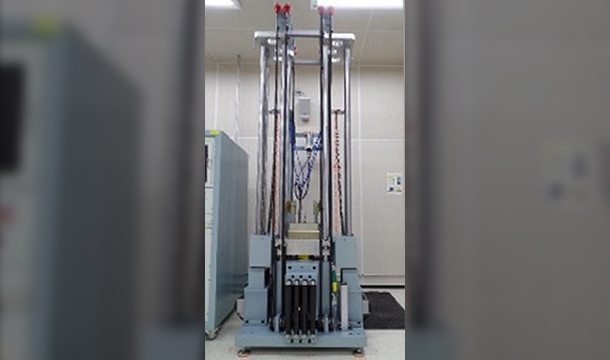
- Equipment
-
LABTON/ G-HSKT30 :
Max. Acceleration – 30,000 G
Technical Use Case

- Related Testing Spec
-
JESD22-B111
Reliability Testing Service Category based on Applications
Appendix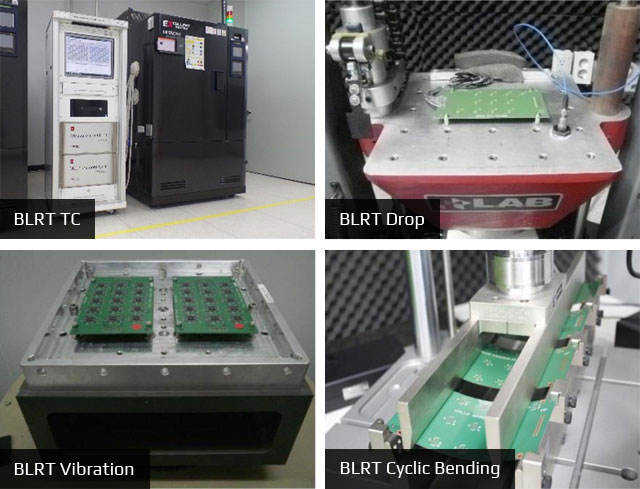
※ Failure Analysis DATA : Cross-Section, Dye & Pry
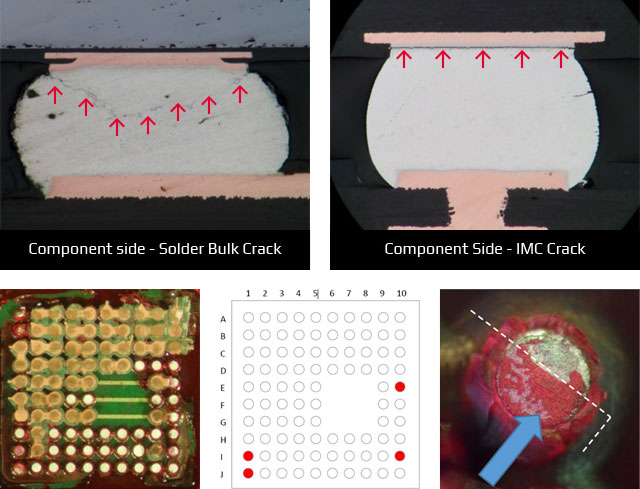
Component and PCB connected Board Level is used to evaluate the lifetime and tolerance of Solder Joints.
Major Evaluation Criteria
-
01.
BLR Drop Test [ JESD22-B111 ]
Evaluating the effects of a drop impact. -
02.
BLR Temperature Cycling Test [ JESD22-A104 ]
Evaluating the effects of thermal expansion differences caused by temperature changes. -
03.
BLR Temperature Humidity Storage Test [ JESD22-A101 ]
Evaluating stress in high temperature and high humidity environments. -
04.
BLR Cyclic Bending Test [ JESD22-B113 ]
Evaluating the effects of repeated bending. -
05.
BLR Vibration Test [ JESD22-B103 ]
Evaluating the effects of the vibration exposed during product transportation.
※ In addition to the key evaluation criteria, you can simulate defects that may occur in the process or field to evaluate the reliability of the solder joint.