
QRT provides specialized reliability testing services for the aerospace, space, and defense industries by precisely simulating extreme environmental conditions on the ground.
Space systems are exposed to severe and combined environmental stresses, including:
Intense vibration and shock during launch
Structural loads during orbital insertion
Repeated thermal expansion and contraction during operation
Even a single structural defect or fastening failure can lead to total system failure. Therefore, ensuring mechanical integrity is a fundamental requirement in space system design.
PIND TEST : Particle Impact Noise DetectionPrecision Non-Destructive Testing for Internal Loose Particles
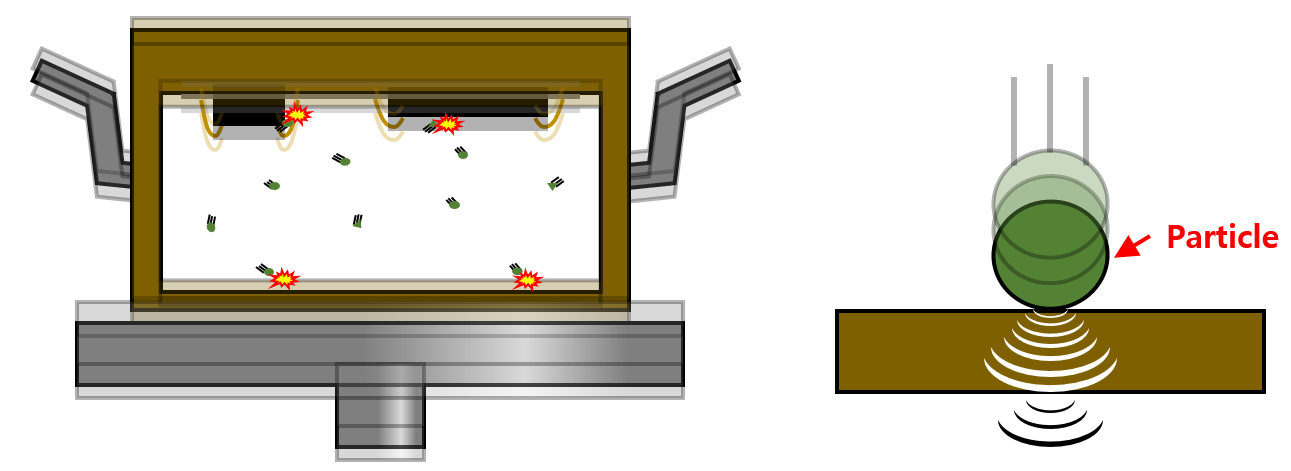
The PIND test detects loose particles inside hermetically sealed semiconductor and electronic component cavities using vibration-based acoustic analysis. This method effectively identifies internal contaminants that are difficult to detect through visual inspection or X-ray analysis, preventing latent failures in aerospace and defense applications.
Applicable Devices
This test is applicable only to high-reliability components with internal cavities and hermetic sealing structures. (Eg. Hermetic transistors, Hermetic diodes, Switches)
Non-hermetic devices (e.g., plastic mold types) are excluded.
Test Features
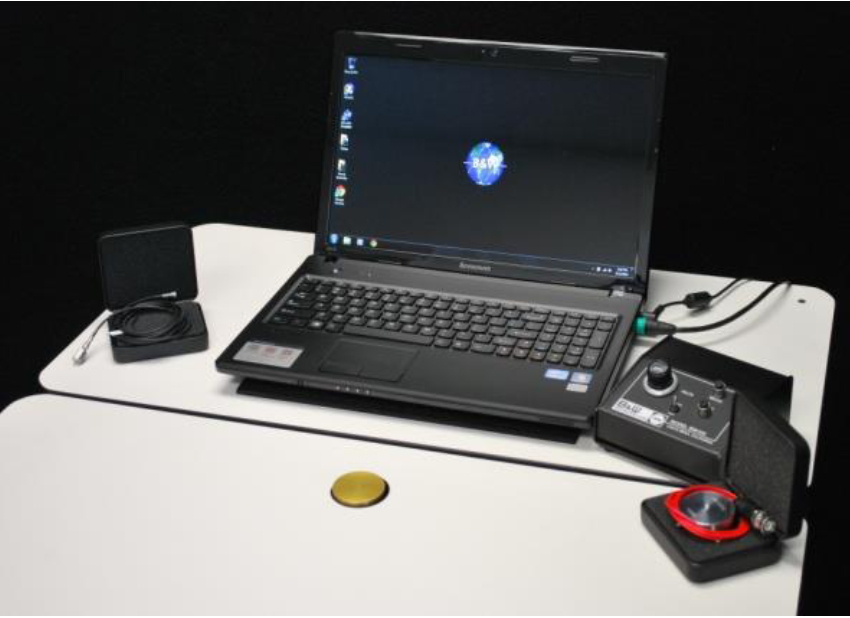
- Precise acceleration control (0–20 g)
- Simultaneous audio and visual monitoring
Real-time detection of micro particles
Standards
MIL-STD-883 Method 2020 / MIL-STD-750 Method 2052 / JEP114A / ESCC / NASA-STD-8739.10

Seal Test : Hermeticity Verification
Hermetic Integrity as the Foundation of Long-Term Reliability
The Seal Test evaluates the hermeticity of semiconductor packages and electronic components to prevent the ingress of moisture, gases, and contaminants that may cause corrosion or functional degradation. In aerospace applications, even microscopic leakage can result in catastrophic failure, making precise hermeticity verification essential.
Applicable Devices
· Hermetically packaged semiconductor and electronic components
· Board-mounted hermetic devices
QRT operates the NorCom 2020 system for optical leak testing, offering the following advantages:
-. Non-destructive and contamination-free: Dry testing method without liquid media
-. Laser-based non-contact inspection: Prevents sample damage
-. High-efficiency integrated inspection process

Vibration Testing in Cleanroom
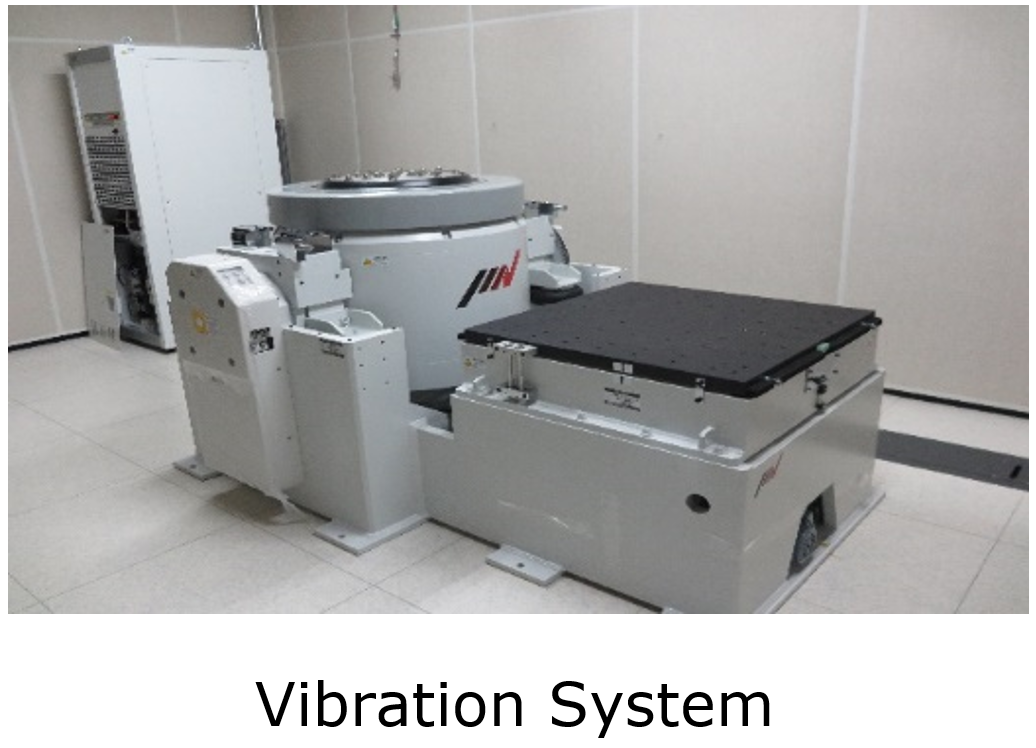
QRT operates vibration testing systems within an ISO 14644 1 Class 8 cleanroom environment.
This setup allows accurate simulation of launch and operational vibration conditions while minimizing particle contamination during testing.
Cleanroom Objectives
-. Minimize particle contamination before during and after testing
-. Maintain sample cleanliness and ensure test reliability
Test Environment
-. ISO 14644 1 Class 8 Cleanroom
-. IMV Vibration System Sine Random Shock
Thermal Vacuum Test
The Thermal Vacuum Test reproduces high vacuum and extreme temperature conditions similar to space and low Earth orbit environments.
In a fully evacuated environment where convection is eliminated, the test identifies localized overheating, thermal imbalance, and functional instability to ensure sufficient thermal design margin and long term reliability.
Test Objectives
-. Verify thermal behavior and temperature distribution under vacuum
-. Confirm functional stability under extreme temperatures
-. Validate thermal design margin and durability
Applicable Systems
-. Satellite payload modules and components
-. High altitude UAV modules and components
Standards
-. MIL STD 883 Method 1014
-. MIL STD 750 Method 1071
-. JESD22 A109
-. ESCC


For inquiries and test requests, please visit the Contact Us section on our website.